2026 Vuelta a Espana Picks & Predictions
Format and Preview of the 2026 Vuelta - Tour of Spain

Are you a cycling enthusiast? Do you enjoy betting on major races? Then you probably know that the Vuelta is one of the three grand tours of professional cycling and that this Tour of Spain ranks alongside the Tour de France and the Giro d'Italia.
Jonas Vingegaard, winner of the last edition of the Vuelta, will not be defending his red jersey in this 2026 Tour of Spain. The race, which starts in Monaco and concludes in Granada, begins on August 22 and ends on September 13. In total, the riders will cover 3,275 kilometers spread over 21 stages.
So, who are the favorites? What are the key factors in predicting the stage winners? Find out everything you need to know on our page dedicated entirely to predictions for the Tour of Spain.
2026 Vuelta Winner: Our Prediction
With defending champion Vingegaard out of the picture, Pogacar was obviously and quite logically the overwhelming favorite to win this year’s Vuelta. Having missed last year’s race, the UAE Team Emirates XRG rider was, on paper, head and shoulders above all other competitors and was determined to win his first Vuelta.
As a reminder, he had only competed in the race once before, in 2019, and at that time had not finished higher than third. He will not be adding the race to his list of victories, as he was forced to withdraw following a crash during Stage 8 and even had to undergo surgery on his collarbone.
This withdrawal completely reshuffled the deck, and many underdogs have emerged as favorites. Notable contenders include Enric Mas, Primož Roglič, Felix Gall, and Oscar Onley. As for the winner, we’re giving the edge to the second-named rider. Our 2026 Vuelta prediction: victory for Primož Roglič!
2026 Vuelta Futures:
- Enric Mas Nicolau +110
- Primoz Roglic +175
- Felix Gall +470
- Oscar Onley +600
- Richard Carapaz +2000
- Mattias Skjelmose +5500
- Sepp Kuss +5500
- Harold Tejada +12500
- Gregor Muhlberger +20000
- Cristian Rodriguez +22500
- Jakob Omrzel +25000
- Jarno Widar +35000
Odds courtesy of FanDuel.
2026 Vuelta: The Detailed Route
The 81st edition of the Spanish race begins with an individual time trial stage in Monaco and ends with a flat stage in Granada. In between, riders will face four medium mountain stages, six mountain stages, and four stages designed to give sprinters a chance to shine.
As is often the case in the Vuelta, the mountain stages will make the difference in the race for the red jersey. This year, with the numerous mountain stages scheduled, the climbers will be able to enjoy themselves, and the gaps in the general classification are likely to be quite significant. The race starts off strong with a short individual time trial followed by a mix of flat and mountain stages.
Things get serious in the second week with a series of hilly and mountain stages. These are likely to be grueling for the peloton, which will not be holding back. We finish strong in the final week with the individual time trial which could also play a role in the fight for the overall victory and/or the podium. The 2026 Vuelta gives the fastest riders a chance on the final stage with a flat route in Granada. A great program in itself, which is sure to keep you entertained until mid-September!
Here is the detailed route of La Vuelta 2026:
- Stage 1 (Saturday, August 22, 2026): Individual time trial. Monaco-Ville - Monaco-Ville (9 km)
- Stage 2 (Sunday, August 23, 2026): Hilly. Monaco-Ville - Manosque (215.2 km)
- Stage 3 (Monday, August 24, 2026): Medium mountains. Gruissan - Font-Romeu (166.7 km)
- Stage 4 (Tuesday, August 25, 2026): Mountain stage. Andorra la Vella - Andorra la Vella (104.9 km)
- Stage 5 (Wednesday, August 26, 2026): Hilly. Costa Daurada - Terres de l'Ebre (171.1 km)
- Stage 6 (Thursday, August 27, 2026): Medium mountains. Alcossebre - Castellón (176.8 km)
- Stage 7 (Friday, August 28, 2026): Mountain stage. Vall d'Alba - Aramón Valdelinares (149.9 km)
- Stage 8 (Saturday, August 29, 2026): Flat. Puçol - Xeraco (176.4 km)
- Stage 9 (Sunday, August 30, 2026): Mountain stage. La Vila Joiosa - Alto de Aitana (187.5 km)
- Rest Day (Monday, August 31, 2026)
- Stage 10 (Tuesday, September 1, 2026): Hilly. Alcaraz - Elche de la Sierra (184.5 km)
- Stage 11 (Wednesday, September 2, 2026): Flat. Cartagena - Lorca (156.1 km)
- Stage 12 (Thursday, September 3, 2026): Mountain stage. Vera - Calar Alto (166.5 km)
- Stage 13 (Friday, September 4, 2026): Medium mountains. Almuñécar - Loja (193.2 km)
- Stage 14 (Saturday, September 5, 2026): Mountain stage. Jaén - Sierra de la Pandera (152.7 km)
- Stage 15 (Sunday, September 6, 2026): Medium mountains. Palma del Río - Córdoba (181.2 km)
- Rest Day (Monday, September 7, 2026)
- Stage 16 (Tuesday, September 8, 2026): Hilly. Cortegana - La Rábida (186 km)
- Stage 17 (Wednesday, September 9, 2026): Flat. Dos Hermanas - Seville (189.2 km)
- Stage 18 (Thursday, September 10, 2026): Individual time trial. El Puerto de Santa María - Jerez de la Frontera (32.5 km)
- Stage 19 (Friday, September 11, 2026): Hilly. Vélez-Málaga - Peñas Blancas (205.1 km)
- Stage 20 (Saturday, September 12, 2026): Mountain stage. La Calahorra - Collado del Alguacil (206.7 km)
- Stage 21 (Sunday, September 13, 2026): Flat. Granada - Granada (99.4 km)
Beginner cycling bettors: how does La Vuelta work?
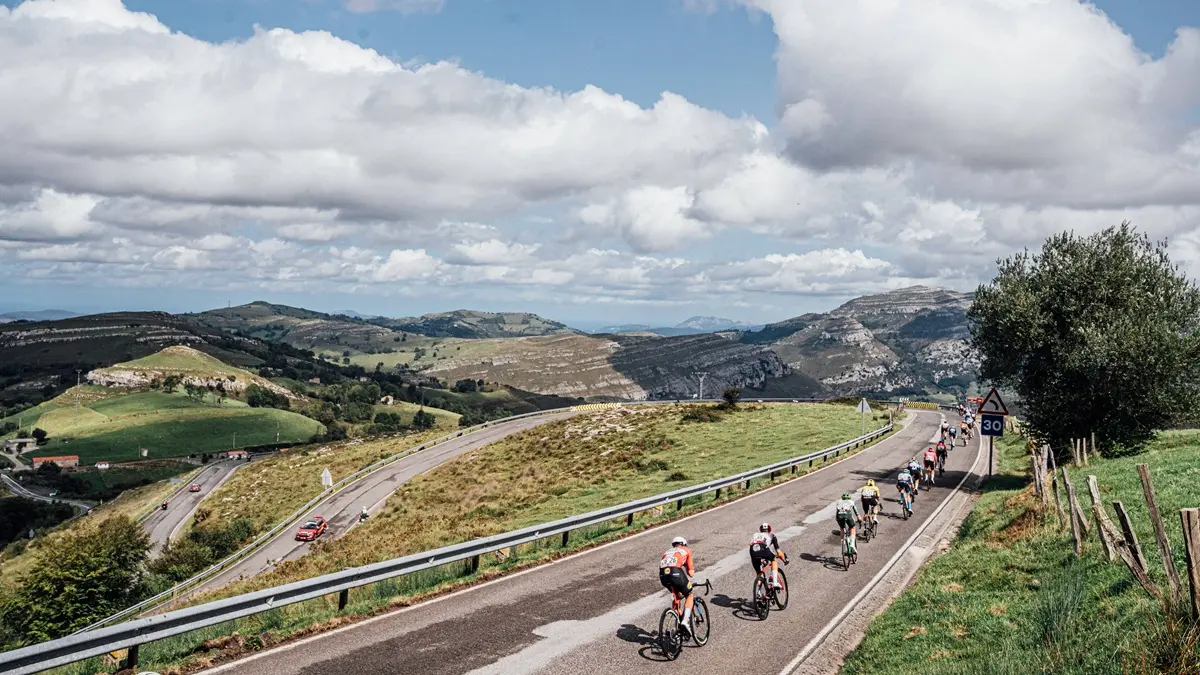
The Tour of Spain has firmly established itself in the cycling calendar between August and September. Alongside the Tour de France and the Giro d'Italia, it is considered one of the most important stage races in the world.
The race is designed to give all riders a chance, combining all types of stages: hilly, mountain, medium mountain, flat, and time trials. The Vuelta therefore offers a balanced and exciting schedule.
Despite this, its position in the year, very close to the end of the season, means that many participating teams only confirm their riders a few days before the race, depending on the condition in which they finished the Tour de France.
Vuelta classification: how is it calculated?
The rider who takes the least time to complete the Vuelta is declared the winner of the race. However, there is one point to note. In order to encourage the leaders in the general classification to remain competitive in their quest for stage victories, the Tour awards 10 seconds, 6 seconds, and 4 seconds to the top three finishers in each stage. In addition, 3 seconds, 2 seconds, and 1 second are awarded to the riders who finish first in each of the 10 intermediate sprints.
Since 2010, the jersey, pants, and helmet of the rider leading the general classification have been red. The blue polka dot jersey belongs to the leader of the mountain classification, the green jersey belongs to the leader of the points classification, and the white jersey belongs to the best young rider.
How can you make reliable predictions for the Tour of Spain?

We outline four key points below, which we will then expand on, and which can help you make predictions for La Vuelta.
According to our cycling experts, these are the four most important aspects to evaluate each stage day:
- Take into account the stage profile
- Monitor current form
- Know the objectives of each rider and each team in the Vuelta
- Know the weather conditions
Of course, following these guidelines does not guarantee success, but it greatly increases the chances of predicting the stage winner each day.
Take into account the profile of the stage
The type of stage (flat, time trial, mountain, etc.) influences the favorites. If the stages are flat, the favorites will be the sprinters or the brave riders who try to win a stage in an individual or collective breakaway.
Time trials are reserved for specialists in the discipline. And during mountain stages, the strongest riders in the Vuelta are usually present at the finish, as these are the days when the gaps are greater and have a greater impact on the overall classification.
Monitor current form
Next, it is important to stay informed each day about what happened during the previous stage. A rider who has had a bad day and lost a lot of time may show signs of weakness or physical problems.
On the other hand, a rider who has held his own among the best on a difficult stage may have the strength to fight for the stage 24 hours later.
Knowing the objectives of each rider and each team in the Vuelta

Is the rider you are considering betting on aiming for the overall victory, or would they be satisfied with a place on the podium? Does this cyclist have a teammate who is higher in the overall standings? Many variables change daily.
A rider may be considered the leader of his team, but along the way, a teammate may have a better chance in the overall standings, which can change the leader to a teammate. Or if the stages pass and a team has no contender for the top spots, it will likely aim for stage wins. Thus, the team will be less conservative than if it were considering a long-term strategy.
Knowing the weather conditions
A rainy day can increase the risk of crashes and cause riders to be more cautious, which increases the chances of a bunch finish. On the other hand, some cyclists cope better than others with extreme heat. With very high temperatures during mountain stages, the gaps at the finish line are likely to be greater.
Mistakes to avoid when making your predictions for the Vuelta
To increase the success of your predictions for the 2026 Tour of Spain, there are a few mistakes you should avoid when placing your bets.
According to our cycling experts, here are the mistakes to avoid when making your predictions for the Vuelta:
- Not taking the stage profile into account in your analysis
- Betting only on well-known riders
- Not comparing odds between sports betting sites
- Not paying attention to the overall Vuelta standings
- Playing odds below +100 on risky stages
- Not taking into account the composition of the teams
By keeping these pitfalls in mind, as well as the advice provided above, you are ready to maximize your results when betting on the 2026 Tour of Spain. A real plus that can make all the difference!
In short: how to make accurate predictions for the Vuelta?
To sum up, it is essential to understand the specific characteristics of each stage in detail before predicting a stage of the Vuelta.
Predicting the winner of a stage can be a challenge for many bettors, which is why our cycling experts offer their predictions every day throughout the competition.
With this in mind, don't hesitate to take advantage of the expertise of our cycling specialists on our website for free. They will help you bet wisely or give you ideas for predictions. Good luck with your bets on the 2026 Vuelta!
Our current Vuelta picks
There are no previews at the moment for this competition